

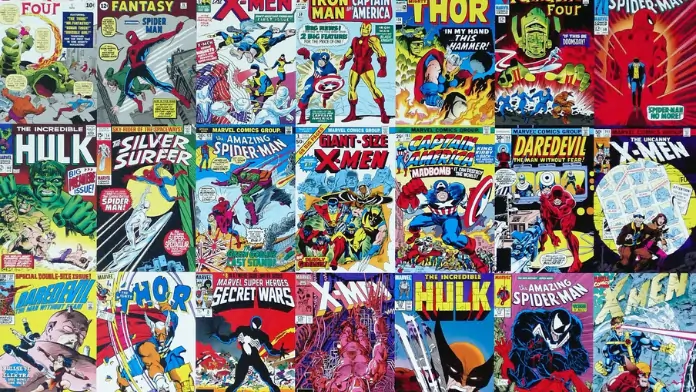
Superman, Batman, Spider-Man, Wonder Woman, The Avengers – these are just a few of the superheroes from the comic books of the past that have flooded our movie and television screens for many years now. There is a seemingly never-ending stream of movies and TV shows about dystopian themes that require the intervention of someone of superior strength, courage and intellect – often from another planet or realm – to intervene on behalf of humanity before the annihilation of the planet or the domination of the world by an evil person or force. Conversely, there is an endless supply of supervillains for us to root against and to thrust our fears upon.
This fascination with superheroes is nothing new. Almost every culture throughout history has fashioned a simple oral tradition or an ornate mythology that recounts stories of human and divine heroes and villains in an ongoing battle for the fate of the world and the survival of humanity. These stories, myths and movies manifest a historical, shared dread that things in the world – even the cosmos – are not as they should be, and a shared, often desperate hope (wish) that we are not left to our own devices and that there is someone or something that can save us.
A significant difference between the past and the present, as it relates to superheroes and, more specifically, to gods and other spiritual forces, is that throughout most of history, most people took for granted the reality of these beings, whether benevolent or malicious. However, since around the 1700s, the beginning of the Age of Enlightenment, and through the Modern and Postmodern eras in which we now live, there has been a rise in atheism, agnosticism, and deism. Through the writings and teachings of various scientists, philosophers, politicians and even theologians, doubt was cast on the reality of anything beyond what our five senses can tell us about life and the universe, and that even if there is a God or gods, humanity has been given the gift of intelligence and reason and left to ourselves. Basically, there is no outside help available; no one is coming to save us.
And for many of the leading minds of the Enlightenment and beyond, it was high time we let go of these silly superstitions about gods and heroes and got down to the business of taking care of ourselves. Thus, as we moved into the Industrial and Technological revolutions that began in the 18th century, especially in the Western world, there was an almost religious fervor that breakthroughs in science and industry would lead humankind into a Golden Age of prosperity, unity, health, and global peace.
Enter the 20th Century, with WWI, WWII, Vietnam and other conflicts making it the bloodiest century in the known history of the world. Add to this the invention, deployment and proliferation of nuclear weapons, and the myth of a man-made utopia was all but shattered for many, if not most, people. The existential dread that had marked humanity from the beginning reared its fearsome head once again, and an increased interest in spirituality of various kinds, including Christianity, as highlighted by the success of the Billy Graham Crusades and the Advent of Campus Crusade for Christ, swept the United States and many other places in the Western world.
And yet, then and now, some persist in the belief of humankind’s ability to save itself. That we are and must be the heroes of our own story. This trend is highlighted in the remarks of President John F. Kennedy, a staunch Catholic nonetheless, as he addressed the graduating class of the American University in 1963. In his address, Kennedy stated boldly, Our problems are manmade; therefore, they can be solved by man…man can be as big as he wants…no problem of human destiny is beyond human beings. However motivating and inspiring President Kennedy’s remarks were, from a biblical perspective, they are short-sighted and misinformed about humanity’s ability to get ourselves out of the messes we’ve made of ourselves and the world.
To be sure, the biblical witness depicts men and women in a noble light compared to the rest of the animal kingdom, as God declares in Genesis 1:26-27; 26 Then God said, “Let us make mankind in our image, in our likeness, so that they may rule over the fish in the sea and the birds in the sky, over the livestock and all the wild animals, and over all the creatures that move along the ground.” 27 So God created mankind in his own image, in the image of God he created them; male and female he created them, (NIV). To be marked by the very image of God and to be appointed to rule over the rest of creation is a high calling indeed. But we were meant to enact this magisterial mandate in cooperation with and complete trust in our creator, never as self-appointed and self-governing entities.
Beginning in chapter three, with the disobedience of Adam and Eve, and culminating in chapter eleven with the building of the Tower of Babel, the book of Genesis lays out the tragic and lurid story of men and women’s rejection of partnership with and trust in God, and their attempts to achieve dominion, significance and security without him – to make a name for themselves, (Genesis 11:4).
As we head into the Advent and Christmas seasons, we will once again rehearse the story of the coming of the Christ child, who was laid in a manger and declared by the Angel Gabriel to be the Son of God, who would save us all from our sins and rule over the nations. The Jewish prophet Isaiah prophesied about the coming of Jesus not just as the Savior and ruler of Israel, but also as one who would calm humanity’s fears and rule the nations in righteousness. Isaiah declares,
For unto us a child is born, to us a son is given, and the government will be on his shoulders. And he will be called Wonderful Counselor, Mighty God, Everlasting Father, Prince of Peace. Of the greatness of his government there will be no end, (Isaiah 9:6-7a, NIV)
In this brief yet stunning prophetic word, Isaiah anticipates both the first and second comings of Christ, as presented in the New Testament. First, Jesus comes as the God/man who was born in a barn and ultimately crucified and resurrected in an act of unprecedented sacrificial love and divine power, freeing us from the power of sin and dealing a fatal blow to all earthly and spiritual forces of evil. And now, Christians look with Isaiah into the promised future as we pray, work, and long for the day when the Son of God returns as the resurrected Christ and the King of kings to fully and finally rule with peace and justice, and to make all things new (Revelation 21:5).
The late pastor, theologian and author Eugene Peterson observes that Stories invite us into a world larger than ourselves…and the Bible is our greatest story. If we just live within ourselves, or if our lives are determined by our own needs, our wants, or our desires, it’s a very small world.1 I would add that if we individually or corporately think we are the heroes of our own story, with the ability to save ourselves, we are setting ourselves up for a tragic ending.
The biblical story is presented to us as the greatest story ever told, centered on Jesus as the superhero we’ve all been longing for. As the Christmas Carol says, The hopes and fears of all the years are met in thee tonight.2 A hero who doesn’t display super-human strength, who isn’t faster than a speeding bullet, and who doesn’t leap tall buildings in a single bound. Rather, Jesus’ superpower is the force of divine condescension and sacrificial love. As the Apostle Paul says in his letter to the Philippians, speaking of Jesus,
Who being in very nature God, did not consider equality with God something to be used to his own advantage; rather he made himself nothing by taking the very nature of a servant, being made in human likeness. And being found in appearance as a man, he humbled himself by becoming obedient to death – even death on a cross! Therefore, God exalted him to the highest place and gave him the name that is above every name, that at the name of Jesus every need should bow, in heaven and on earth and every tongue acknowledge that Jesus Christ is Lord, to the Glory of God the Father, (Phil. 2:6-11).
This is the Christmas story; it truly is the greatest story ever told. It’s the story of reality and history for all people. In these challenging times, with all the competing stories of how we can make the world a better place, let’s lean into the story of Jesus like never before and continue to work and worship together in his name and way for the Glory of God and the Good of Our Neighbors near and far.
—Pastor Scott
1 Eugene Peterson, quoted in Lectio 365 online devotional, October 22, 2025
2 O Little Town of Bethlehem